Apple smart glasses have a big social hurdle to overcome
Apple could find a solution to the smart glasses problem, but ultimately social pressures and actual laws might be the only things that help.
Google created the idea of "Glassholes," and Meta skipped socially awkward and jumped straight into sexual harassment with their glasses. So, Apple has a tough job ahead of it trying to convince the world that wearable smart glasses are actually okay.
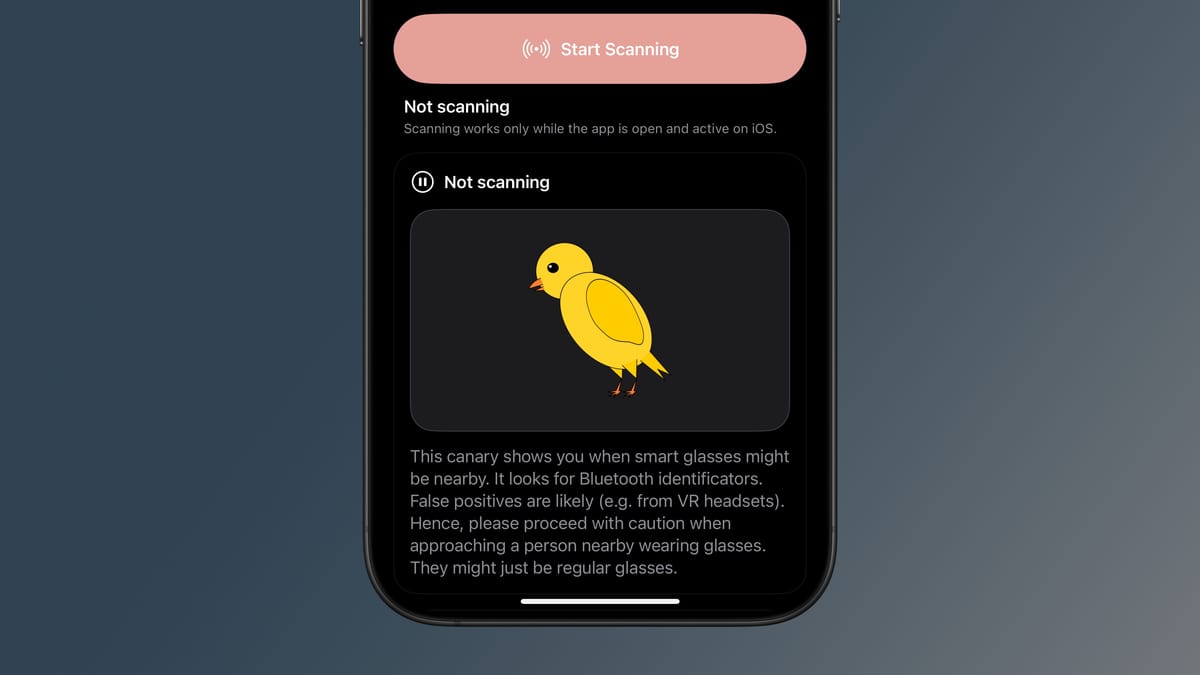
I'm thinking about this today because the Nearby Glasses app by Yves Jeanrenaud has launched on the Apple App Store. It is a simple utility that sniffs for the Bluetooth and other signals sent out by smart glasses like Meta Ray-Bans. Of course, it could also detect other accessories or VR headsets, so it isn't foolproof, but it is an interesting concept.
I don't want people going out and harassing smart glasses users. They're not all out trying to record private moments or follow people into bathrooms. Many just think they're a neat way to listen to music and take the occasional photo.
However, one bad apple can ruin the bunch. Creeps have taken to using smart glasses to record and harass people in massage parlors, in bathrooms and changing areas, or at parties. Videos of men trying to hit on drunk women at bars have become a go-to for viral content on various social feeds.
It's all really gross, and I'm not sure what the solution is.
Apple may find a solution
You can't beat human nature. Bad people are going to do bad things with otherwise harmless or useful technology. AirTags that are meant to help us find luggage become a stalking tool, while iPhone cameras become a part of creeps' arsenal in capturing up-skirt photos in public.
The up-skirt photo problem was so prevalent in Japan that laws were passed requiring a shutter sound to be played when a digital camera is used.
I'm not entirely sure what Apple can do here to prevent harassment via glasses. Laws need to catch up with the technology and ensure that offenders are punished severely. For example, if a person posts a video that was clearly recorded without the subject's knowledge or approval via hidden or wearable cameras, something could be done.
At a minimum, a takedown request, and perhaps even legal action leading to arrests and fines depending on the content in the video.
However, none of that has to do with Apple. Public reaction and pushback could also police the use of smart glasses in some environments to the point that people are ostracized if they're wearing them in some contexts.
Meta's law team showing up to court while wearing Meta Ray Bans was immediately met with the judge kicking them out until they got rid of the glasses. Bars could ban the use of wearable glasses, as could sporting events or concerts.
However, the design of Meta's glasses is meant to make them look like regular glasses, and that's the point. Purposefully designing these glasses to be ugly or undesirable isn't a solution either. Apple wants people to wear these things all day.
I think that Apple will have some clever solutions beyond a simple LED turning on when recordings are taken. Alerting nearby users, like with the Nearby Glasses app, is a solution, but could lead to glasses wearers being targeted.
Society will ultimately define what's allowed
The thing is, if you're in a public space, unless otherwise posted, photos and videos are a given. You're perfectly allowed to take photos and videos, but the act of taking out your phone and holding it up is a universal signal. It gives people the chance to get out of the way or at least protest to being in the shot.
Perhaps Apple will force you to reach up and click a shutter button on the glasses frame to take a photo. Again, I'm not sure of a solution, but there's likely a clever one I'm not realizing.
I expect that wearable displays and cameras will only become more commonplace. They're quite useful for accessibility and access. There isn't a world where smart glasses just never become a thing.
A lot of this development is outside of Apple's hands. I expect society will build rules around these products much like it has smart watches and phones. It will just take some time.
So, when Apple inevitably reveals a set of smart glasses that are essentially some AirPods with cameras this winter, expect the early adopters to be seen as odd. It helps that Meta already has smart glasses out there, but they're much less known.
Apple's entry into the space will make smart glasses a much better-known product universally. Perhaps that is when society will begin to build a proper rules structure around the product.