Apple's ads won't hurt you
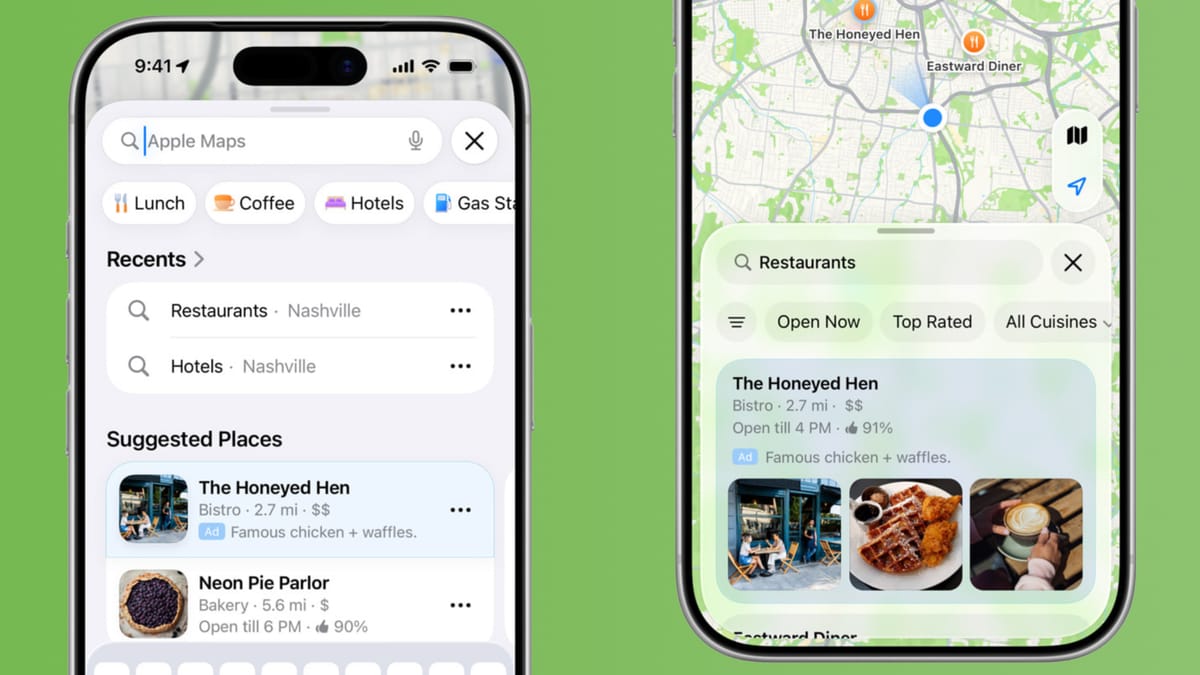
I've seen this growing resistance to Apple's push into advertising as a bit odd. Believe me, I understand the hatred for advertising, especially within products you've already paid for.
However, I don't think we can live in a world that simply doesn't have advertising. Sure, products speak for themselves if they're good, but how do you find out about said products in the first place?
There has to be a middle ground here.
Advertising won't go away
The reason we all hate advertising so much is because of the industry's willingness to abuse the populace and treat them as no more than numbers on a page.
Advertising is as old as commerce, as is the distrust for them. Snake oil salesmen, tabloids, loud radio bulletins, and six minutes of TV ads per half hour all fed into this general annoyance throughout human history.
When the internet arrived, advertisers soon followed. Bright, sometimes audible, flashing neon ads were plastered across every free surface of various websites. Click the wrong link and you've suddenly got a Yahoo! toolbar, or worse, a computer virus.
Google, Facebook, and Amazon then stepped onto the ad scene by collecting every piece of available data about a user in order to show them ads for some piece of junk. In some cases, the ads were eerily useful, while in others, they were creepy and invasive.
That data collection has only intensified to the point that online privacy is a myth users can chase with some effort. Entire businesses have been raised to help keep you from being surveilled at every turn.
Apple even spent a good portion of the 2015-2022 timeframe bashing surveillance advertising and the companies that violate user privacy. While Apple still holds its privacy stance, it has also taken a more proactive role in advertising.
And that, it seems, is the betrayal felt by those who care.
Apple ads can actually be good
Let's set Apple News ads aside in this discussion, because those are an ugly travesty that need completely rethought.
Apple's approach to advertising is no different, in my opinion, to the function of a billboard or a phone book. If you don't know what I mean by "phone book" or "yellow pages" here, it's these thick books that used to get dropped off on your doorstep filled with every phone number and business data for your region.
Yep, that phone book even included your home phone. Anyone in your area could simply pick up a phone book, find your number, and give you a call. This was all considered rather normal at the time.
Nowadays, we protect our phone number nearly as much as we protect our Social Security number. If we give the wrong entity our phone number, it could mean a lifetime of harassing calls and texts about political donations or scams.
Anyway, when you search the App Store, and soon, Apple Maps, you are shown an ad slot at the top of the results. Businesses can vie for that slot through an auctioning system not very different from Google's web ads.
The significant difference being – Apple isn't using a collection of user data to show the ad. Instead, it's using the non-identifiable data points it has about the user as a result of them using the service in the first place.
Like a phone book or billboard, the ads you see are purchased by businesses that the resident can actually benefit from or interact with. They're shown because of your physical location, and thanks to surveys and census results, a billboard owner or phone book operator will know which ads should be shown where for better results.
Apple Maps and the App Store seem to function similarly. Apple will fill that ad slot in search results using a combination of indicators that aren't tied to the user. And no, this isn't what Google is doing. Apple's use of differential privacy actually ensures that queries and results can't be tied back to an individual.
Google, Amazon, and Facebook might all claim to utilize differential privacy in some way, but they're being loose with how they define it. They claim that the personalized data structures about the user are kept totally separate from the shadow profiles generated based on product usage. However, studies have shown that access to both data sets makes it incredibly easy to tie the non-identifiable information to a user profile.
Apple, on the other hand, isn't creating user advertising profiles. It isn't following users around the internet and the real world, nor is it purchasing data from credit card companies to attempt and trace back physical purchases with digital habits.
There's a webpage specifically set up to state Apple's approach to advertising. The first two bullet points are the most important:
- We don’t buy, sell, or share users’ data with other companies.
- We don’t track users. This means we don’t link user or device data collected from Apple apps with user or device data collected from third parties for advertising purposes.
That's it. And so far, Apple has not given us any reason to distrust them in this area.
Apple advertising could mean better ads
Advertising is what helped keep the web free and open to the entire globe. You don't have to pay for access to the internet, though there are some places with paywalls that are justifiable.
When a website or app utilizes advertising responsibly, it can be additive without getting in the way of the experience. Shoving multiple pop-ups in a user's face, forcing their way into the user's inbox, and forcing multiple clicks to read a single article are all annoying and hostile.
I hope you are all visiting websites that don't attack users in that way. AppleInsider is very thoughtful with its ad placement, and our newsletter isn't used to abuse readers either.
There isn't a world that exists without ads. If you've got the means to pay premium rates and never see another ad, then that's great for you. I also pay for ad-free where possible, like streaming, because I don't want my media interrupted that way.
I think the reaction to Apple's entry and expansion into advertising is overblown. It is fed by years of being abused by the surveillance capitalism established by the other tech giants.
I don't believe Apple advertising is a slippery slope. If anything, it will be an interesting view into how to do ads right. Of course, Apple News ads are garbage, and we can all collectively hope Apple fixes that at some point.
When I saw a Lock Screen notification for a coupon to see F1: The Movie, I wasn't angry or upset. I was happy to save myself $10.
Apple has a responsibility to not abuse its platform or its trust. I don't want to see this devolve into some kind of freemium garbage where you pay $1,000 for a smartphone only to get an ad for toilet paper on your Lock Screen.
There are plenty of other things to be upset with Apple about today. Let's not worry about the imagined slippery slopes, but instead push for better developer relations and reduce the need for global regulation.
The Apple ads aren't going to hurt you.