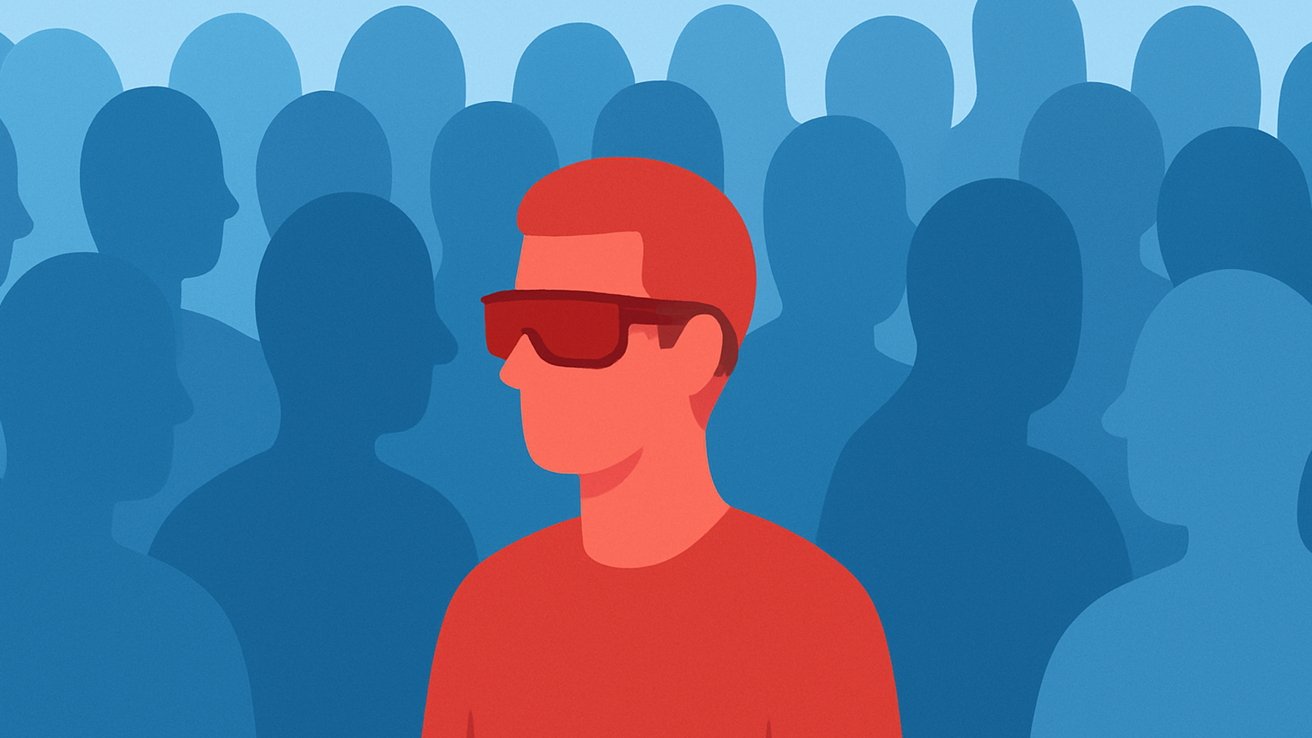
Meta has made it Apple's job to fix the smart glasses privacy problem
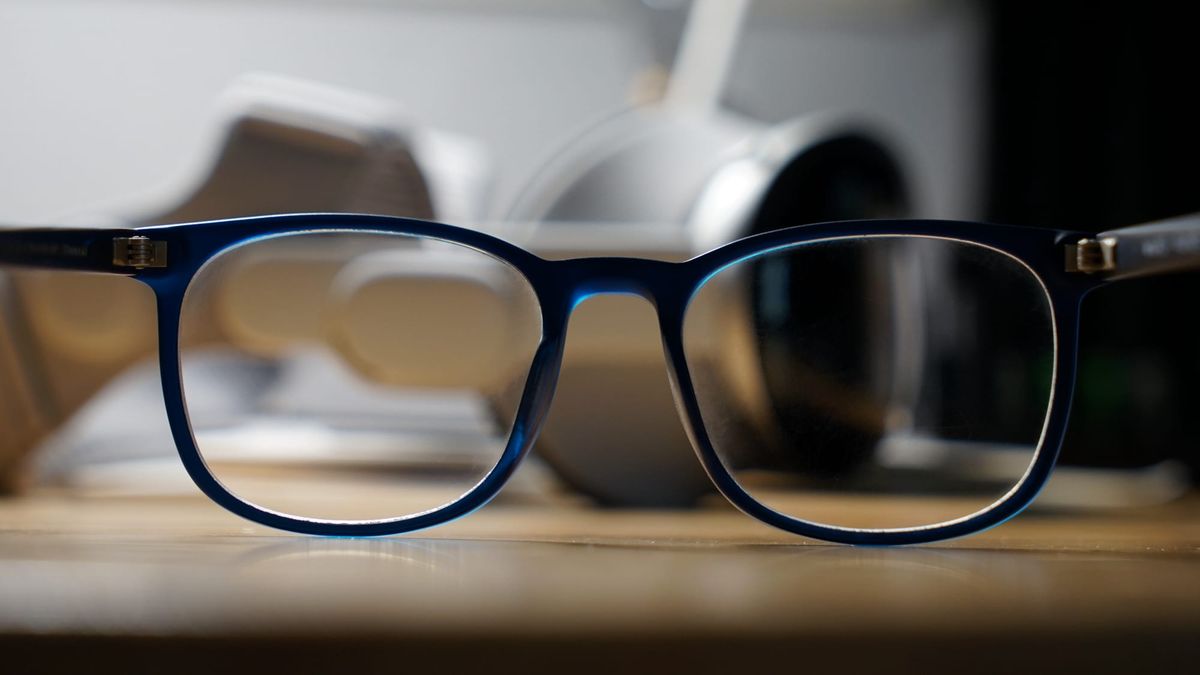
Weirdos and abusers buy smart glasses with cameras. At least, that's where society has landed on this nascent technology today.
Men (yes, in this case, primarily or exclusively men) have been buying Meta smart glasses, paying to have the recording light removed, and recording their interactions with people. Some have gone so far as to record themselves in massage parlors convincing workers to perform sexual acts.
This is just one example of a million of how a generally simple piece of technology can become known as the "perv glasses" with little to no effort. What's worse is how they are presented on stage. You can go back to various reveals and announcements for both Meta's and Android XR glasses where presenters, including Mark Zuckerberg himself, talk about doing things inconspicuously.
Everything about how the current generation of smart glasses feels gross and wrong. The primary user appears to be a person that forgot their smartphone can take a photo or do things like have a high-resolution display.
Don't get me wrong, I understand the basic appeal. The user anecdotes about "I was able to get a photo I would not have time to get with my iPhone" are totally a use case. Also, never forget the accessibility features these kinds of devices can provide.
It is early days for this technology, and I can see a clear through line for how it becomes an everyday part of our life.
Society evolves to adapt to technology
While I don't have a solution to offer today, I am thinking about how society is going to move forward with this technology. Perhaps I'm wrong, but there's something that feels inevitable about an always-on wearable display with interactive inputs like microphones, cameras, and speakers.
It's not an if, it's a when.
If smart glasses were a doomed concept, humanity would not have pursued the concept actively in science fiction and reality for generations. We've seen attempts at VR for decades, and the advancements in AR in the past decade have been astounding.
However, just like with Google Glass and the emergence of "glassholes," we're running into a whole new problem. It isn't that the technology isn't ready or can't exist, like George Jetson's impossible suitcase car that weighs nothing. It's that society has rejected the premise – twice now.
Google Glass was a poor launch because it was a solution without a problem that cost an astronomical amount of money (for the time and functionality being offered). The people that did have what were effectively public beta test versions were immediately labeled and ostracized.
Fast forward to today and you've got a whole new generation of assholes getting punched at concerts for wearing Meta recording devices. It's the people, not the technology, that are the problem.
That said, society has overcome some odd things before. Look at headphones/headsets. I remember when the Bluetooth headset was introduced as cutting-edge and society immediately hated everyone for walking around talking to a disembodied figure, only to realize they had a headset in one ear.
The funny thing is, this seemingly led to two end results: the slow acceptance of people talking to their Bluetooth headset (AirPods) and the assholes who walk around talking on speakerphone because they can't be bothered to put an earbud in.
Society, in fact, now encourages the use of the earbud versus speakerphone. It also seems people have forgotten that they can hold the device to their ear and speak normally, but that's another issue.
Society also had to learn to live with everyone having a camera in their pocket.
I was very into photography for most of my life and started capturing pictures of people and places before smartphone cameras became ubiquitous. I'll never forget a friend asking why I'd take a photo of them. It was baffling to them that I'd have a digital camera just to capture little moments for looking back upon.
Sure, they understood that people bought digital cameras or disposable ones for big events or special occasions, but it seemed lost on them why I'd want a casual photo of them at all.
A few years later, it was the norm.
AR is the future of interacting with technology
Augmented Reality represents a paradigm shift in technology and interfaces. I truly believe, once AR displays are good enough, small enough, and last long enough on battery, that they'll become as ubiquitous as Apple Watches. No, not everyone will buy one, but you'll suddenly see many people in public with them on.
Thankfully, so far, I've met maybe two people with Meta glasses and both had them as an idle curiosity.
Meta is a terrible company that does everything it can to get more data about every human being on Earth, whether they have an account or not. Strapping cameras and microphone to its users was the last frontier in this effort. Google has similar needs even if it behaves less grossly with user data.
I wonder how smart glasses will evolve in the next five years. It seems we're only going to see more models and types out in the world as they get cheaper to manufacture and distribute. Society is already reacting by banning them from various jobs, events, and buildings.
Apple's entry into the space will likely be a turning point. As annoying as that might be to hear, and I am sure someone is rolling their eyes muttering "fanboy" at this statement, it's a simple truth. While it doesn't always happen, Apple has a history of defining hardware categories with its late entry.
The iPhone is the obvious device that changed the face of cellular phones forever. It might be easy to forget Apple's influence on the market with Apple Watch, AirPods, and iPad.
The biggest challenge Apple will face going into the smart glasses industry is defeating the societal preconceptions around smart glasses. Apple will have to prove its glasses are different, privacy-focused, and hopefully even stylish to some extent.
Apple doesn't need to collect user data for advertising or whatever the hell Meta and Google do with it today. It doesn't even need it for AI model training. That, combined with the trust Apple users have in the company for privacy, security, and control of personal information will likely lead to broad acceptance
Guardrails and trust are critical
I do believe there are places smart glasses will always be banned, like concerts. If you need a prescription, it is on you to have a spare set of glasses on you or at least in your vehicle just in case. Maybe Apple could implement a mode that venues can use to stop unauthorized recording, who knows? But showing up with no backup plan is no excuse just because your prescription glasses also happen to be smart.
There needs to be some active thought put into how to ensure Apple's glasses can't be used for covert recording. Perhaps it is an impossible problem to solve, I'm not sure. All technology can be used with bad intentions no matter how many safeguards are put in place.
Whatever happens, it can't be like what happened with AirTags, which had some novel ideas about preventing abuse, but the ecosystem lock created issues on its own. Thankfully, Google and Apple worked on a solution together and you don't really hear about AirTag abuse anymore except on a rare occasion.
People are reacting quite poorly to the existence of smart glasses. Apps that attempt to alert the user of the presence of smart glasses have risen to the top of the App Store. There is a general discomfort that can be felt.
I don't think there is a world where smart glasses simply cease to exist. Yes, there will always be controversies around them and the people that abuse them, but society will build a structure around dealing with the new norm.
A basic permission structure will be needed with it comes to using AR glasses. Areas that are meant to be private should remain so. Perhaps systems can be created to alert the smart glasses to being in a no-recording zone, for example. Or maybe a user's smartphone can help manage the permission structure. It's tough to say how such tools could be implemented or controlled, let alone how they might be bypassed.
I heard something interesting recently that I really liked when talking about privacy and how to frame it. It isn't that we have something to hide. Privacy is about control over our information and who gets access to it.
In a world filled with smart glasses and other surveillance technology, privacy is more important than ever. It seems Apple is the only company that cares.
AI will fade while AR takes over
I'm glad that the AI boom is subsiding just in time for Apple to enter the smart glasses market. The two technologies evolving in parallel tied them too closely, and I hope that no one believes smart glasses must be AI because Meta built an entire marketing scheme around it.
There is some utility in having access to information at a glance. Apple Watch is proof of that. While the smart glasses of today are barely more functional than AirPods, I expect that AR displays will be transformative to how we interact with technology.
Every surface becomes a potential computing paradigm.
Let's hope we don't have to wait too long for laws and society to catch up with this technology. As usual, whether on accident or on purpose, it seems Apple being late to the smart glasses game will benefit them greatly. Apple can learn from the mistakes of its competitors, target features that solve problems created by other smart glasses, and prepare the way for AR glasses with each new OS update adding more features.
Apple Vision Pro was just a preview. The future of wearable AR devices is still bright, even with assholes trying to ruin it for us today. It's just going to take a little longer than what we previously thought to get there.
If you want more thoughts on smart glasses, my colleague over at AppleInsider, Amber Neeley, wrote an excellent piece about smart glasses in November.
 Amber Neely