HilliTech's Newsletter: Happy Juneteenth

There are few dates in American history more important than June 19, 1865. It is important that even as our current leaders try to erase Black History, that we fight to preserve it.
Happy Juneteenth everyone! Here's some links I'd like to share this week:
 Gita Jackson
 Janus Rose
 Isaiah Colbert
 Jason Koebler
 Joanna Stern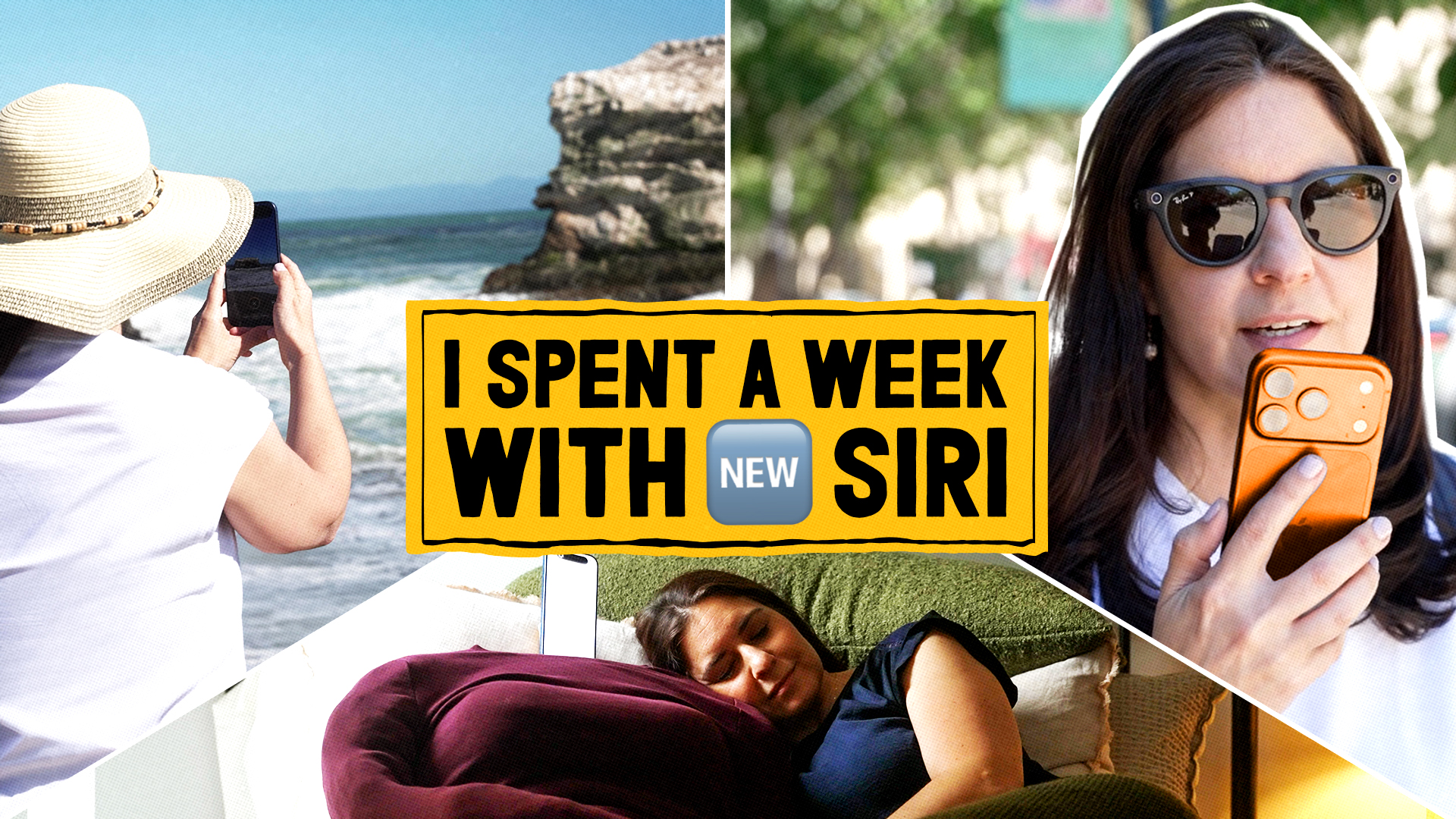
For whatever reason, this free article posted on the Tran Girlismo Patreon won't render as one of these fancy links, but give it a read anyway. It's a great personal essay on Forza Horizon (2012) and how these things age and we age with them.
What I think about when I think about tech
It's been an interesting couple of weeks since the WWDC keynote where Siri AI was introduced. There was the first wave of everyone rushing to the betas and hopping on the wait list, then the wave of everyone trying Siri AI for the first time while still indexing, and now, finally, getting the full experience with indexing complete.
Feelings are mostly positive as I look around the web, if mixed in some places. You can see here in this week's AppleInsider Podcast that William and I sometimes struggle to reconcile how to discuss Siri AI.
Is it worse in some ways? Better in others? How harsh should we be in our criticism? Is Apple trying to convince people to come back to Siri? How many people actually stopped or never used Siri in the first place?
I think it's complicated to say the least, but I wanted to take a moment to share exactly how I think about and approach these kinds of topics. William is brilliant of course, so nothing I say here is a criticism of William or his issues with Siri, of course.
First, I think it is important to always remember I'm the nerd in the room full of non-nerds. Maybe our demographic at AppleInsider will mostly be nerdy people that have pre-existing knowledge of technology, but I'm not necessarily writing for them.
When I write, I write for everyone. I don't jump straight into the most extreme lingo speak and tech terms, nor do I dumb things down to the point I'm explaining what a web browser is. I like to try and ride a line in the middle – informative and insightful without pandering to any specific audience.
Like anyone, I'm going to have my tics, my bias, and my angles. Don't let anyone tell you otherwise. It is human nature and who we are will reflect in what we write, no matter how tonally neutral we might write.
Let's use the Siri discussion as an example.
When Siri launched it was something viewed as exciting and futuristic. Us nerds know that internal discussions about the future of Siri went nowhere and the assistant was mostly put on the back burner for years, but most people didn't. While we wailed and pulled our hair begging for Siri to improve at a faster rate (because it did improve over time), the world moved on.
The people that used Siri used it, and those that didn't never noticed anything. Apple Maps improved and suddenly Siri was great at getting directions. Apple Music knowledge was added and suddenly you could ask Siri about songs that were playing. The average user that interacted with Siri only knew that assistant and saw that grow over time.
They didn't watch YouTube videos of people making other assistants race or take quizzes on their knowledge. People set timers, reminders, played music, and controlled their lights. When Siri failed, and boy did it fail, people would just try again or pull out their phones and then use Siri again later.
Regular people don't view technology failing as some kind of betrayal. Technology fails all the time, and I'm not talking about computers. Every invention of mankind is technology in the broadest definition, and things break or don't work regularly.
Heck, I remember spending hours trying to get my TV antenna to line up perfectly so I could watch Sonic the Hedgehog on Saturdays. That poor signal was a part of watching television, not something for me to curse and give up on, but to push against. To test its limits, to try and find a better way.
Siri's issues did get worse from about 2023 to today due to Apple fiddling around in the backend. That AI delay in 2025 solidified a Siri in place that was worse than the one that existed in the previous five years. Oh, there have been worse versions of Siri than the one we had this past year, but our memories are short.
Nerds noticed, and the general population might have in some instances, but most, I'm sure, just carried on using Siri. "Turn off the lights." "Set the timer." "Oh my God, Siri, no I said call Rachel."
So, I say all this to say that when I discuss Siri on the podcast or write about it here, it isn't that I'm not aware of its issues or pain points. If anything, I'm acutely aware. But why point out a sore spot we're all aware of instead of discussing what's actually working? What's actually new? And how we might fix it?
William's assertion that Siri should just work no matter what you say and how you say it is true. That's Apple's promise and it should fulfill that promise. But there's a part of me that wonders if that promise is even realistic.
Whether we realize it or not, technology teaches us how to use it just as much as we program it to work for us. The TV should get the signal just fine, but holding that antenna just right means I get that much more of my cartoon through the fuzz.
I'm willing to put up with that paint to get the happy end result. I also trust that those pain points aren't permanent. This is beta 1 of a completely rebuilt Siri. There are things it can do now that it has never done before. There are also things Siri could do in 2011 that it can't do well anymore.
That "where can I hide a dead body" joke from the original Siri? Yeah, it dials emergency services now.
If I encounter a limitation with Siri, I might sigh and try again like anyone, but I don't then lambast the whole thing as an abject failure. I learn what works and use that (lights, music, and now personal knowledge) and avoid what breaks. I don't really get riled up about it.
Things change. We change with it. And my writing and discussions around tech tries to find a balance between criticizing what's wrong and praising what's good, because too much of tech discussion today is lazy and cynical.
I refuse to forget where we came from and how amazing technology is today. Just because your pocket supercomputer told you a rock in California was in Italy doesn't mean I go write a 2,000-word story about how Siri sucks now.
Like most people, I either keep adjusting that antenna, or shrug and move on.
The insidious secondary grift created by AI
I've seen a few folks coming to a realization recently and categorizing it almost as conspiratorial.
It's simply this: Today, AI is being sold as the savior of humanity while it dries up resources and causes job and market disruptions. Tomorrow, it will be the reason why we don't own anything anymore.
I don't think this is that controversial or conspiratorial a thought. In fact, it is clear that late-stage capitalism would inevitably lead to this point. You as a consumer need to purchase goods in order to contribute to capitalist markets, but readily available, plentiful, and long-lasting goods, especially technology, prevent that.
So, instead, capitalists happily pre-order and promise miles of data centers so that all the memory and storage capacity is saturated for years, thus making consumer electronics scarce and unaffordable. Then, you, the tech giants, offer to share your computing power with the masses.
They sell you some tiny little pocket thing that interfaces with the near-infinite compute power in the cloud. You pay a subscription for that compute power that you never own. It's a capitalist wet dream.
However, there are a few problems with this plan that I totally believe some companies think will result from AI.
First, the consumers you price out of your goods won't be able to afford to pay for cloud computing. Second, companies like Apple will continue to thwart these plans by offering powerful and affordable consumer goods that last years more than competitors.
Finally, the people paying hundreds of dollars to offload their brian function to AI bots in the cloud won't be able to subsidize the entire market. Really, OpenAI still hasn't found a way to stay funded past 2028. It's about to be a serious problem for the entire AI market.
No, this one isn't a conspiracy. I fully expect those kinds of conversations are happening in board rooms in some of the most greedy corporations in the world. The problem is, they're too high on their own supply.
The only way for this future where we rent all computing power, including development and gaming, is if AI continues to succeed and have enough capital to drain global resources. It just can't.
If you've wondered why some of these CEOs walk out and say "if you don't use our AI it'll all simply disappear," that's why. So don't worry, I don't think that's the future we're heading towards.
I honestly believe humanity is better than all this. We'll find our way out.
Closing thoughts
Wow, that was a weird newsletter huh? If you made it this far, I appreciate you reading! I suppose my brain will just go some places some weeks, and you all get to be along for the ride.
As always, if you're not seeing this newsletter in your inbox, you can! Create an account here on HilliTech, for free, and you'll get the newsletter each week. Plus, having an account gives you commenting privileges.
Gotta end it here or it'll be too big to send. I'll be back Monday with more for the blog. Oh, and if there are any topics I cover you'd like to see more of, like gaming, anime, or gadgets, outside of Apple news, let me know.