HilliTech's Newsletter: The iPhone Duopoly
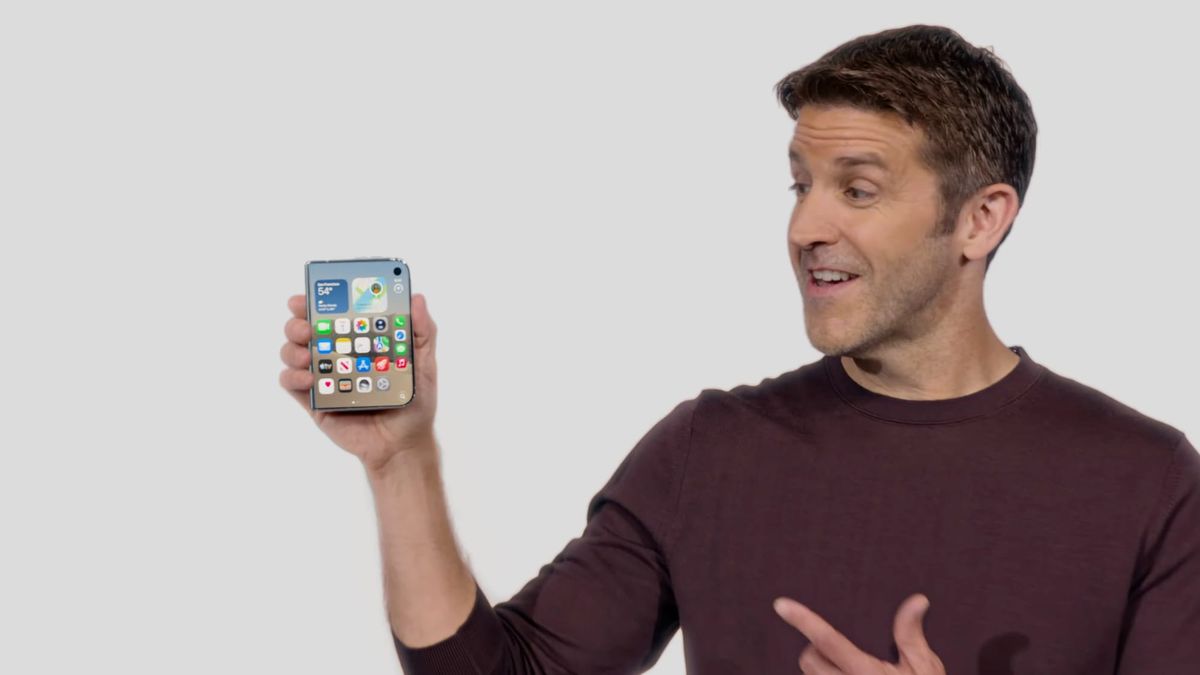
The iPhone Duo has finally been revealed, and Apple seems to have everyone convinced that this is the one to choose. It certainly is an innovation in a sea of same-y iPhones, but let's not ignore the compromises either.
Choosing the iPhone Duo
The "Surprise and shine" Apple event sure was a roller coaster. I was immediately interested in the new variable aperture on iPhone 18 Pro, and Apple sold me on Apple Watch Ultra 4 with the updated sensors.
Then came iPhone Duo. I already knew I was going to choose Apple's foldable this year so I could experience the device first-hand, but I had no idea if I'd even like what Apple showed us.
I've interacted with Android foldables before and was always left unimpressed. The hardware felt cheap, the display felt plastic-y, and the software didn't seem aware it was in a foldable at all. The category remained a niche 7 years after they debuted, with the highest estimates at about 2% of the market.
Apple prides itself on the vertical integration between hardware and software, so I always knew there'd be something more to Apple's foldable. Needless to say, they shocked me from the first moment when they showed the transition of the software when it is opened.
The iPhone Duo isn't Apple's best iPhone. It doesn't have the best cameras, it requires new MagSafe accessories, and its inner display material could lead to some issues over time.
However, this is just one interesting looking device. Apple rethought iOS for a squat and wide outer display, which in turn led to a better tablet interface for the inner display. Developers will have their hands full trying to ensure their apps are ready for every display shape and orientation, but there's something fun about the new layout.
iOS has changed a lot thanks to customization options including dark mode, widgets, Focus Modes, and a reimagined Lock Screen. Even though so much has changed, a lot remained familiar too, at least until the iPhone Duo.
It's isn't an iPad running iPadOS, but neither is it an iPhone running the standard iOS. This new system is something else, and I wonder if we won't see a folding OS split off in the future similar to how iPadOS did.
The nano texture inner display helps eliminate the visibility of the crease. It's there, and will likely get worse over time. That's the nature of foldables and I'm not sure if or when that will change.
I'm not personally worried about the crease as long as it isn't as bad as what you might find on Android foldables. Apple has done a lot of work to ensure the crease is minimized and nearly invisible, some of the AI part matching Apple does is similar to other Android manufacturers. Though the addition of the nano texture display to reduce reflections and crease visibility is a first.
I expected if any company could convince me to like a foldable, it was Apple. They succeeded, and now even if it weren't for work, I expect I'd choose the iPhone Duo anyway.
There's just one problem I know I'll be concerned with until I can test it: the cameras.
Variable aperture on a smartphone
Just like with foldables, Apple wasn't the first company to introduce variable aperture in a smartphone. It's interesting as an option to have, and I'm very tempted to test it out.
I may be grabbing an iPhone 18 Pro temporarily to at least test the feature and its range. Thank goodness for return policies.
When Apple revealed variable aperture, I wondered if I had made the wrong choice in getting the iPhone Duo instead. Apple, as always, did an amazing job showing the feature off.
However, I began to think through what the feature might actually provide. It isn't that the feature won't be useful, but the range doesn't seem all that impressive.
The f-stop options are f/1.48, f/1.8, f/2.8, and f/4.0. Third-party apps can smoothly choose any value between, while Apple's Camera app only offers the four toggles.
Yes, f/1.48 is impressive and a step up from the f/1.78 on the iPhone 17 Pro Max, but on a sensor that small, it's going to be mostly negligible for most situations. I can't wait to see what some early reviews show us in the next week, though I expect they'll be underwhelmed by the feature overall. What I saw in the post-event hands-on showed the aperture was indeed variable, but had marginal effect on the photos.
I expect the biggest difference you're going to see is when you're shooting more complicated shots that have a close foreground subject and a nearby middle ground subject. Closing to f/4.0 will let you ensure the middle ground subject is in focus, provided there's enough light. That's cool and useful, if you remember and bother to use it.
On the other end, f/1.48 will mean slightly better background blur and bokeh effect on up-close subjects. It also means more light gathering for low-light photos and faster night mode shots. However, how much more remains to be seen.
In everyday use, I am willing to bet there won't be that much difference unless you're pixel peeping.
iPhone 18 Pro will surely have an exceptional camera system, Apple's best yet. It'll be better than my iPhone 17 Pro Max in some situations, absolutely.
However, I'm choosing iPhone Duo with its dual camera system. Apple didn't reveal what camera the Fusion Main camera on iPhone Duo is, but it seems to be a new one not used in other models. Some specs match up with iPhone 17e or iPhone Air, while others match up with iPhone 18 Pro.
The iPhone Duo can capture 4K 120Hz video and pixel binned 24MP photos. It doesn't support ProRAW photos or ProRes video. It also can't capture spatial photos or videos.
I'll miss the spatial video function, though I believe we're going to see an official spatial video conversation in visionOS in the near future. I'm not sure why it can't capture spatial video, but there's perhaps some silly reason tied to the cameras and their sensor orientation.
I don't use the Telephoto 4x or 8x cameras much, but when I need them, they're great to have. I'll certainly miss them, but only for their utility, not their artistic quality. I suppose the question at this point is whether or not iPhone Duo can capture the photos I expect from an iPhone.
I know I'm used to iPhone Pro's camera system. As I took photos of my niece's first birthday, I recognized the photos may have turned out differently with an iPhone Duo.
I'll be doing a camera comparison to the iPhone 17 Pro Max when the iPhone Duo arrives. Most photos, like those in well-lit spaces, will likely not be notably different. It's the edge cases I'm worried about.
If iPhone Duo can't be my reliable pocket camera, I may need to consider buying a dedicated camera to carry with me at all times. I do have a Sony a 7II, but it's rather large and isn't suitable for everyday carry.
We'll see what happens. For now, I hope I can get by for the next year with just the iPhone Duo cameras. I'd hate to think I'll miss out on great photos or take worse photos overall simply because I chose Apple's foldable this time around.
Audio Intelligence
I'll have more thoughts on the new Apple Watch features at a later date, but I want to share some initial reactions now.
First off, I think it is irresponsible for tech nerds and journalists to be spreading misinformation and fear mongering about the new audio intelligence features. Yes, this is a new direction for Apple and has serious privacy implications, but jumping straight to "Apple Watches are now listening to you" is just poor reporting.
Apple clearly has put a pile of tech behind keeping the feature private and secure. Let's not pretend this is some kind of slippery slope to government surveillance or user data capture. It just isn't and implying otherwise is a waste of everyone's time.
The feature clearly is targeting the AI wearable market. We knew this was coming, though not in this particular form. Apple Watch was always an obvious endpoint for AI interactions and technology, and those companies trying to sell shirt pins or necklaces were asking people to adopt yet another thing.
Instead, you'll get the features of a wearable AI product without the expensive monthly subscription, privacy invading technology, or additional hardware. It'll just work, and work on the watch you already wanted to wear (provided you buy the Apple Watch Ultra 4 or Apple Watch Series 12).
I think this was a brilliant gambit considering OpenAI seems ready to release their own hardware in the next few months. There is no world in which OpenAI's gadget has the same privacy and security.
Okay, let's discuss the tech itself. Apple's demos were fine, if not the best illustrations of the technology in question. I think 15 seconds is far too short a buffer to be of any use, for one.
I'm not sure I'll ever be in a situation where the Live Rewind feature comes in handy. This one feels more like a "we can do this" feature instead of a "you'll need this" one.
The dinner table one seems fine, but their example was flawed. Instead, I think it might be useful if the specials were listed to a table full of people who began ordering, I could scroll back and view the spoken menu again without a problem.
That is, if the watch heard everything and transcribed it correctly. This feature absolutely needs testing. Up that buffer to 1 minute or more and we'll see how useful it might be.
I'm more interested in Siri Recaps. I think they might be fun for reviewing the day and writing Journal entries. The entire feature's success will depend on what the summaries say and what details they provide.
There will always be people that abuse the feature and use it for idiotic purposes. Maybe you had an argument with your spouse and attempt to point out what was said with this summary. I've seen this and other examples thrown around.
The problem with these examples is that the summary doesn't provide direct quotes or attribute speakers. It's just a generic list of high points.
One thought I had was if my wife and I have a verbal discussion of travel plans, budgets, or some family drama, I can get some idea of what was said using Siri Recaps.
The feature won't record data about what it believes is abusive language, sensitive content, or personally identifiable information. It isn't going to record your social security number, but it will highlight that you filed your taxes, for example.
I think that it would be best if we all test this feature out when we get ahold of the hardware and go from there. Let's see what is revealed from these Siri Recaps and how useful Live Rewind might be.
Apple is looking for feedback on both features. We've seen plenty of Apple Watch features come and go, and if these are duds, they'll join Time Travel, Walkie Talkie, and others in the feature graveyard.
Some links I'd like to share
 Wesley Hilliard
 Isaiah Colbert
 Isaiah Colbert
 Wesley Hilliard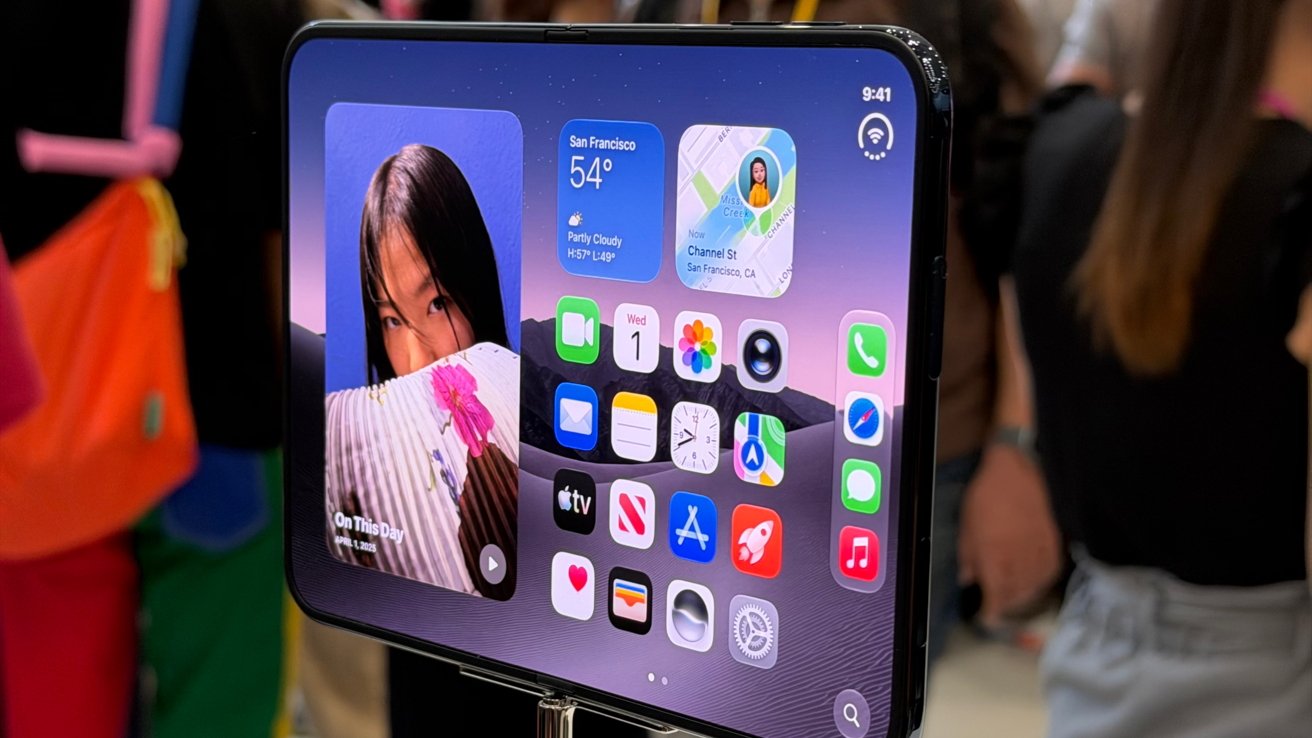
As always, thanks for reading the blog this week. It is going out a bit later than usual thanks to family plans this weekend. I appreciate comments on the blog or via BlueSky or Mastodon if you'd like to discuss what I've written. Reblogs are also appreciated.
If you've got an extra dollar or two, please consider tapping that Buy Me A Coffee link on my website. It all goes to paying for Ghost and the domain for this blog.